C Programming Lab Manual – 61

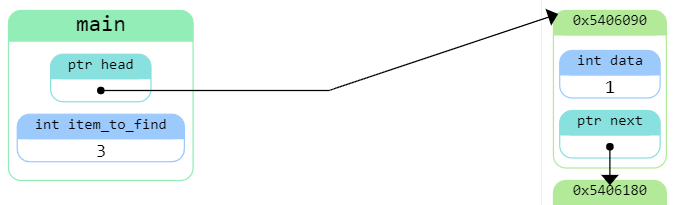
Write a C program for Singly Linked List Operations.

// Create a Pointer
struct Node 
  int data;
  struct Node* next;
// Insert at the beginning
 set the data of the new node to new_data
  set the next pointer of the new node to the current head
  set the head_ref to the new node
// Insert a node after a node
  set the data of the new node to new_data
  set the next pointer of the new node to the next node of prev_node
  set the next pointer of prev_node to the new node
// Insert at the end
  set the data of the new node to new_data
  set the next pointer of the new node to null
  set the next pointer of last to the new node
//Delete a node
  set temp to head_ref
  set prev to null
    free the memory of temp
    return
set the next pointer of prev to the next pointer of temp
  free the memory of temp
// Sort the linked list
set index to the next node of current
 swap the data of current and index
set index to the next node of index
set current to the next node of current
// Print the linked list
print the data of node
 set node to the next node of node
//function main()
  set head to null
  print "Linked list: "
  printList(head)
  print "After deleting an element: "
  deleteNode(head, 3)
  printList(head)
  Link a node when deletion
  Delete Node
 print "Sorted List: "


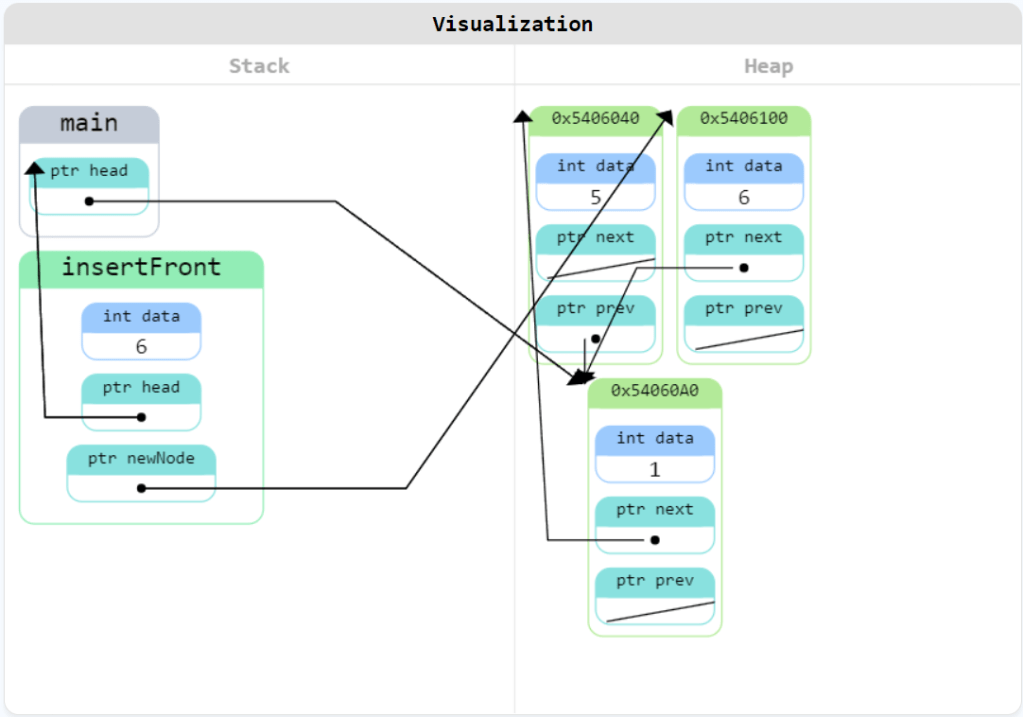
Figure: Linked List Operations

#include <stdio.h>
#include <stdlib.h>

// Create a node
struct Node {
  int data;
  struct Node* next;
};

// Insert at the beginning
void insertAtBeginning(struct Node** head_ref, int new_data) {
  // Allocate memory to a node
  struct Node* new_node = (struct Node*)malloc(sizeof(struct Node));

  // Insert the data
  new_node->data = new_data;

  // Set the next pointer of the new node to the current head
  new_node->next = (*head_ref);

  // Move head to the new node
  (*head_ref) = new_node;
}

// Insert a node after a given node
void insertAfter(struct Node* prev_node, int new_data) {
  // Check if the previous node is NULL
  if (prev_node == NULL) {
    printf("The given previous node cannot be NULL");
    return;
  }

  // Allocate memory to a new node
  struct Node* new_node = (struct Node*)malloc(sizeof(struct Node));

  // Insert the data
  new_node->data = new_data;

  // Adjust the pointers to insert the new node
  new_node->next = prev_node->next;
  prev_node->next = new_node;
}

// Insert at the end
void insertAtEnd(struct Node** head_ref, int new_data) {
  // Allocate memory to a new node
  struct Node* new_node = (struct Node*)malloc(sizeof(struct Node));

  // Assign the data to the new node
  new_node->data = new_data;

  // Set the next pointer of the new node to NULL
  new_node->next = NULL;

  // Check if the linked list is empty
  if (*head_ref == NULL) {
    // If the linked list is empty, make the new node the head
    *head_ref = new_node;
    return;
  }

  // Traverse to the last node
  struct Node* last = *head_ref;
  while (last->next != NULL)
    last = last->next;

  // Set the next pointer of the last node to the new node
  last->next = new_node;
}

// Delete a node
void deleteNode(struct Node** head_ref, int key) {
  // Store the head node
  struct Node* temp = *head_ref;
  struct Node* prev = NULL;

  // Check if the head node itself holds the key
  if (temp != NULL && temp->data == key) {
    // Change the head
    *head_ref = temp->next;

    // Free the old head
    free(temp);
    return;
  }

  // Search for the key to be deleted
  while (temp != NULL && temp->data != key) {
    prev = temp;
    temp = temp->next;
  }

  // If the key was not present in the linked list
  if (temp == NULL)
    return;

  // Unlink the node from the linked list
  prev->next = temp->next;

  // Free the memory allocated for the node
  free(temp);
}

// Search for a node
int searchNode(struct Node** head_ref, int key) {
  // Start from the head node
  struct Node* current = *head_ref;

  // Traverse the linked list
  while (current != NULL) {
    // If the key is found, return 1
    if (current->data == key)
      return 1;

    // Move to the next node
    current = current->next;
  }

  // Key not found
  return 0;
}

// Sort the linked list in ascending order
void sortLinkedList(struct Node** head_ref) {
  // Initialize current and index nodes
  struct Node* current = *head_ref;
  struct Node* index = NULL;

  // Temporary variable for swapping data
  int temp;

  // Check if the linked list is empty or has only one node
  if (head_ref == NULL)
    return;

  // Perform bubble sort on the linked list
  while (current != NULL) {
    // Set the index node to the node next to the current node
    index = current->next;

    while (index != NULL) {
      // Swap the data if the current node's data is greater than the index node's data
      if (current->data > index->data) {
        temp = current->data;
        current->data = index->data;
        index->data = temp;
      }

      // Move to the next index node
      index = index->next;
    }

    // Move to the next current node
    current = current->next;
  }
}

// Print the linked list
void printList(struct Node* node) {
  while (node != NULL) {
    printf(" %d ", node->data);
    node = node->next;
  }
}

// Driver program
int main() {
  // Initialize the head node
  struct Node* head = NULL;

  // Insert nodes into the linked list
  insertAtEnd(&head, 1);
  insertAtBeginning(&head, 2);
  insertAtBeginning(&head, 3);
  insertAtEnd(&head, 4);
  insertAfter(head->next, 5);

  printf("Linked list: ");
  printList(head);

  printf("\nAfter deleting an element: ");
  deleteNode(&head, 3);
  printList(head);

  int item_to_find = 3;
  if (searchNode(&head, item_to_find)) {
    printf("\n%d is found", item_to_find);
  } else {
    printf("\n%d is not found", item_to_find);
  }

  // Sort the linked list
  sortLinkedList(&head);
  printf("\nSorted List: ");
  printList(head);

  return 0;
}

Linked list:  3  2  5  1  4 
After deleting an element:  2  5  1  4 
3 is not found
Sorted List:  1  2  4  5
C Programming Lab Manual – 60

Write a C program for Circular Queue Implementation.

#define MAX_SIZE 5 

int a[MAX_SIZE];
int front = -1;
int rear = -1;

void enqueue(int x)
if (front == -1 && rear == -1)
front = rear = 0;

else
rear = (rear + 1) % MAX_SIZE;
a[rear] = x;


void dequeue()
if (front == -1 && rear == -1)
printf("queue is empty \n");
return;

else if (front == rear)
front = rear = -1;
else
front = (front + 1) % MAX_SIZE;


Figure: Circular Queue Implementation

// Circular Queue implementation in C

#include <stdio.h>


int items[5];
int front = -1, rear = -1;

// Check if the queue is full
int isFull() {
  if ((front == rear + 1) || (front == 0 && rear == 5 - 1)) 
return 1;
  return 0;
}

// Check if the queue is empty
int isEmpty() {
  if (front == -1) return 1;
  return 0;
}

// Adding an element
void enQueue(int element) {
  if (isFull())
    printf("\n Queue is full!! \n");
  else {
    if (front == -1) front = 0;
    rear = (rear + 1) % 5;
    items[rear] = element;
    printf("\n Inserted -> %d", element);
  }
}

// Removing an element
int deQueue() {
  int element;
  if (isEmpty()) {
    printf("\n Queue is empty !! \n");
    return (-1);
  } else {
    element = items[front];
    if (front == rear) {
      front = -1;
      rear = -1;
    } 
    // Q has only one element, so we reset the 
    // queue after dequeing it. ?
    else {
      front = (front + 1) % 5;
    }
    printf("\n Deleted element -> %d \n", element);
    return (element);
  }
}

// Display the queue
void display() {
  int i;
  if (isEmpty())
    printf(" \n Empty Queue\n");
  else {
    printf("\n Front -> %d ", front);
    printf("\n Items -> ");
    for (i = front; i != rear; i = (i + 1) % 5) {
      printf("%d ", items[i]);
    }
    printf("%d ", items[i]);
    printf("\n Rear -> %d \n", rear);
  }
}

int main() {
    //!showArray(items)

  deQueue();
  enQueue(1);
  enQueue(2);
  enQueue(3);
  enQueue(4);
  enQueue(5);
  enQueue(6);
  display();
  deQueue();
  display();
  enQueue(7);
  display();
  enQueue(8);

  return 0;
}

Queue is empty !! 

 Inserted -> 1
 Inserted -> 2
 Inserted -> 3
 Inserted -> 4
 Inserted -> 5
 Queue is full!! 

 Front -> 0 
 Items -> 1 2 3 4 5 
 Rear -> 4 

 Deleted element -> 1 

 Front -> 1 
 Items -> 2 3 4 5 
 Rear -> 4 

 Inserted -> 7
 Front -> 1 
 Items -> 2 3 4 5 7 
 Rear -> 0 

 Queue is full!! 

C Programming Lab Manual – 59

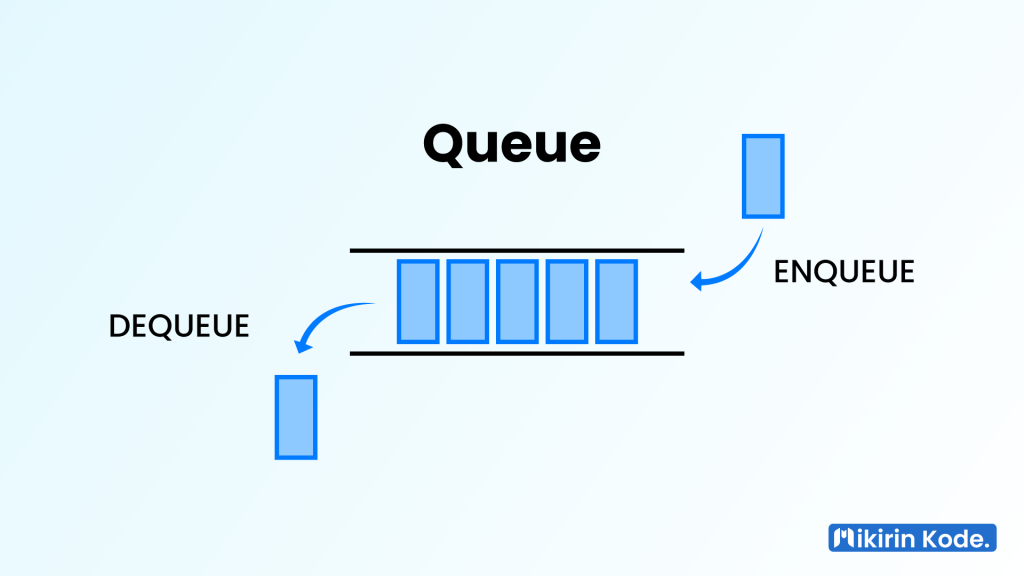
Write a C program for Queue Implementation.

FUNCTION is_full(front, rear)
    IF (rear + 1) MOD MAX_SIZE == front THEN
    	RETURN True    	
    ELSE
        RETURN False
    ENDIF
ENDFUNCTION 


FUNCTION enqueue(queue, front, rear, data)
    IF is_full(front, rear) == True THEN
        PRINT("Queue is full")
    ELSE
        rear = (rear + 1) MOD MAX_SIZE
    	queue[rear] = data
        IF front = -1 THEN // First item to be queued
            front = 0
        ENDIF
    ENDIF
    RETURN (front, rear)
ENDFUNCTION

FUNCTION dequeue(queue, front, rear)
    IF is_empty(rear) == True THEN
	PRINT("Queue is empty - nothing to dequeue")
        dequeued_item = Null
    ELSE
        dequeued_item = queue[front]
        // Check if the queue is empty
        IF front == rear THEN
            front = -1
            rear = -1
        ELSE
            front = (front + 1) MOD maxsize 
        ENDIF
    ENDIF
    RETURN (dequeued_item, front, rear)
ENDFUNCTION

Figure: Queue Implementation

#include <stdio.h>

int queue[4];
int front = -1;
int rear = -1;

void enqueue(int value) {
    if (rear == 4 - 1) {
        printf("Queue is full. Cannot enqueue.\n");
        return;
    }
    if (front == -1)
        front = 0;
    rear++;
    queue[rear] = value;
}

void dequeue() {
    if (front == -1 || front > rear) {
        printf("Queue is empty. Cannot dequeue.\n");
        return;
    }
    front++;
}

int getFront() {
    if (front == -1 || front > rear) {
        printf("Queue is empty. No front element.\n");
        return -1;
    }
    return queue[front];
}

int isEmpty() {
    if (front == -1 || front > rear)
        return 1;
    else
        return 0;
}

int getSize() {
    if (front == -1)
        return 0;
    else
        return rear - front + 1;
}

void display() {
    if (front == -1 || front > rear) {
        printf("Queue is empty. Nothing to display.\n");
        return;
    }
    printf("Queue elements: ");
    for (int i = front; i <= rear; i++)
        printf("%d ", queue[i]);
    printf("\n");
}

int main() {
    //!showArray(queue)
    enqueue(10);
    display();
    enqueue(20);
    display();
    enqueue(30);
    display();
    enqueue(40);
    display();
    enqueue(50);
    display(); 
    printf("Front element: %d\n", getFront()); 
    printf("Queue size: %d\n", getSize()); 
    printf("Is queue empty? %s\n", isEmpty() ? "Yes" : "No");
    dequeue();
    display(); 
    dequeue();
    display(); 
    dequeue();
    display();
    dequeue();
    display();
    dequeue();
    return 0;
} 

Queue elements: 10 
Queue elements: 10 20 
Queue elements: 10 20 30 
Queue elements: 10 20 30 40 
Queue is full. Cannot enqueue.
Queue elements: 10 20 30 40 
Front element: 10
Queue size: 4
Is queue empty? No
Queue elements: 20 30 40 
Queue elements: 30 40 
Queue elements: 40 
Queue is empty. Nothing to display.
Queue is empty. Cannot dequeue.

C Programming Lab Manual – 58

Write a C program for Stack Implementation.

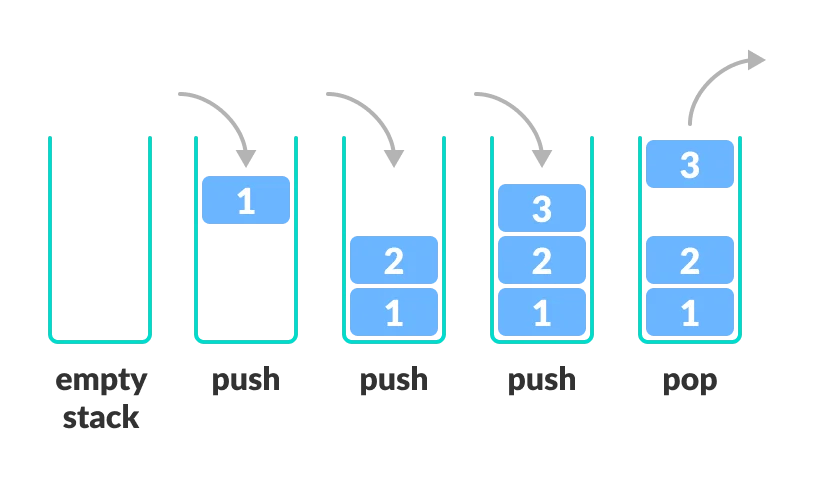
Figure: Stack Implementation

#include <stdio.h>

int stack[4];
int top = -1;

void push(int element) {
    if (top == 4 - 1) {
        printf("Stack Overflow\n");
    } else {
        stack[++top] = element;
        printf("Pushed is: %d \n", element);
    }
}

void pop() {
    if (top == -1) {
        printf("Stack Underflow\n");
    } else {
        printf("Popped is: %d \n", stack[top--]);
    }
}

int peek() {
    if (top == -1) {
        printf("Stack is empty\n");
        return -1;
    } else {
        return stack[top];
    }
}

int main() {
    //!showArray(stack)
    push(10);
    push(20);
    push(30);
    push(40);
    push(50);
    printf("Top Element is: %d\n", peek());
    pop();
    pop();
    pop();
    pop();
    pop();
    printf("Top Element is: %d\n", peek());
    return 0;
}

Pushed is: 10 
Pushed is: 20 
Pushed is: 30 
Pushed is: 40 
Stack Overflow
Top Element is: 40
Popped is: 40 
Popped is: 30 
Popped is: 20 
Popped is: 10 
Stack Underflow
Stack is empty
Top Element is:-1

C Programming Lab Manual – 57

Write a C program for Ternary Search.

double ternary_search(double l, double r) {
    double eps = 1e-9;              //set the error limit here
    while (r - l > eps) {
        double m1 = l + (r - l) / 3;
        double m2 = r - (r - l) / 3;
        double f1 = f(m1);      //evaluates the function at m1
        double f2 = f(m2);      //evaluates the function at m2
        if (f1 < f2)
            l = m1;
        else
            r = m2;
    }
    return f(l);                    //return the maximum of f(x) in [l, r]
}

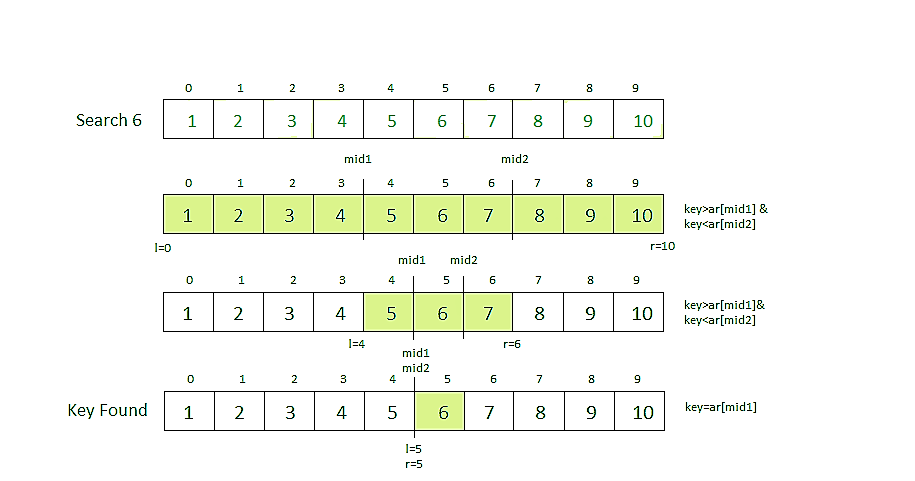
Figure: Ternary Search

#include <stdio.h>

int ternarySearch(int l, int r, int key, int ar[])
{
	if (r >= l) {

		// Find the mid1 and mid2
		int mid1 = l + (r - l) / 3;
		int mid2 = r - (r - l) / 3;

		// Check if key is present at any mid
		if (ar[mid1] == key) {
			return mid1;
		}
		if (ar[mid2] == key) {
			return mid2;
		}


		if (key < ar[mid1]) {

			// The key lies in between l and mid1
			return ternarySearch(l, mid1 - 1, key, ar);
		}
		else if (key > ar[mid2]) { 

			// The key lies in between mid2 and r
			return ternarySearch(mid2 + 1, r, key, ar);
		}
		else {

			// The key lies in between mid1 and mid2
			return ternarySearch(mid1 + 1, mid2 - 1, key, ar);
		}
	}

	// Key not found
	return -1;
}

// Driver code
int main()
{
    //!showArray(ar)
	int l, r, p, key;

	// Get the array
	// Sort the array if not sorted
	int ar[] = { 1, 2, 3, 4, 5, 6, 7, 8, 9, 10 };

	// Starting index
	l = 0;

	// end element index
	r = 9;

	// Checking for 5

	// Key to be searched in the array
	key = 5;

	// Search the key using ternarySearch
	p = ternarySearch(l, r, key, ar);

	// Print the result
	printf("Index of %d is %d\n", key, p);

	// Checking for 50

	// Key to be searched in the array
	key = 50;

	// Search the key using ternarySearch
	p = ternarySearch(l, r, key, ar);

	// Print the result
	printf("Index of %d is %d", key, p);
}

Index of 5 is 4
Index of 50 is -1

C Programming Lab Manual – 56

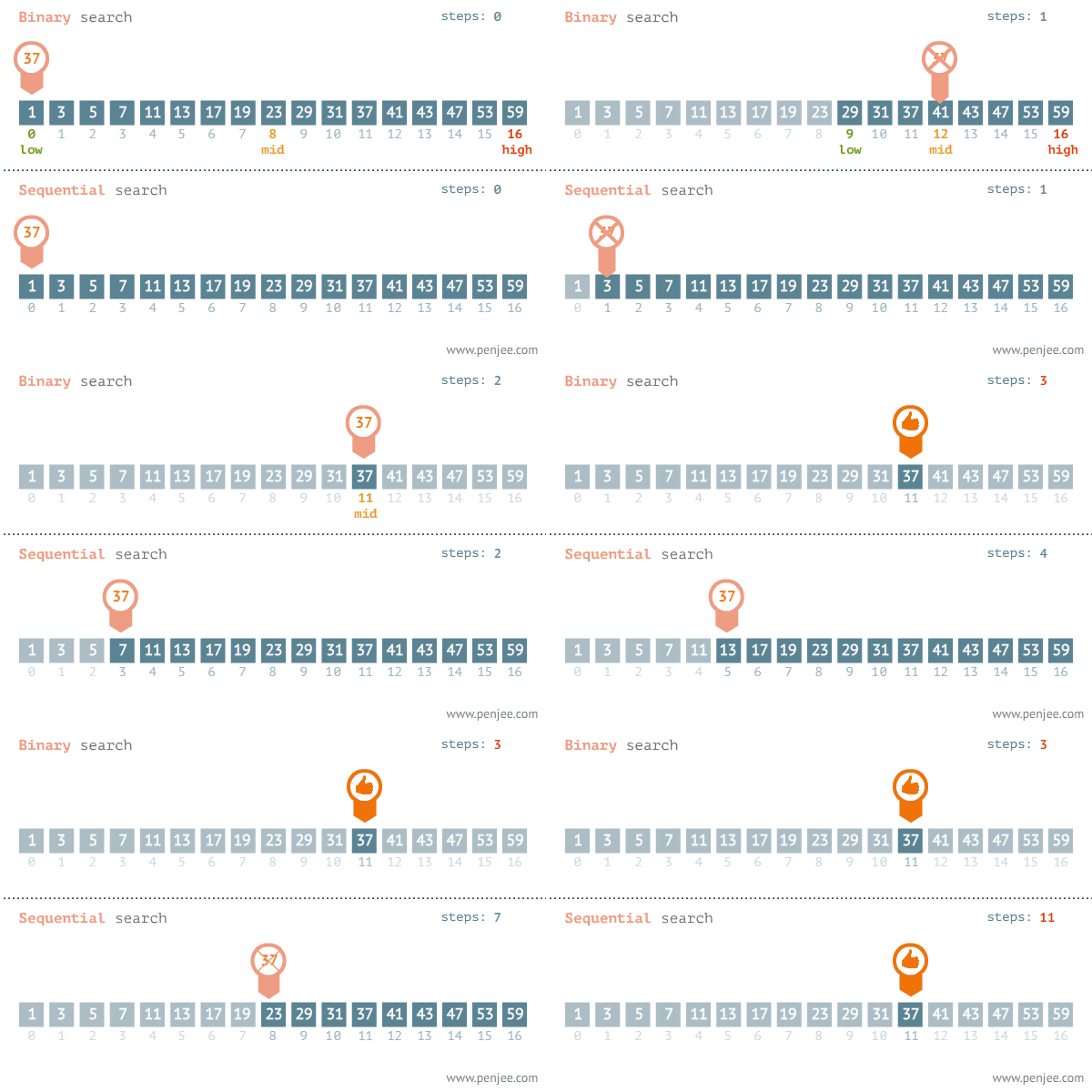
Write a C program for Binary Search.

Procedure binary_search
   A ← sorted array
   n ← size of array
   x ← value to be searched

   Set lowerBound = 1
   Set upperBound = n 

   while x not found
      if upperBound < lowerBound 
         EXIT: x does not exists.
   
      set midPoint = lowerBound + ( upperBound - lowerBound ) / 2
      
      if A[midPoint] < x
         set lowerBound = midPoint + 1
         
      if A[midPoint] > x
         set upperBound = midPoint - 1 

      if A[midPoint] = x 
         EXIT: x found at location midPoint
   end while
   
end procedure
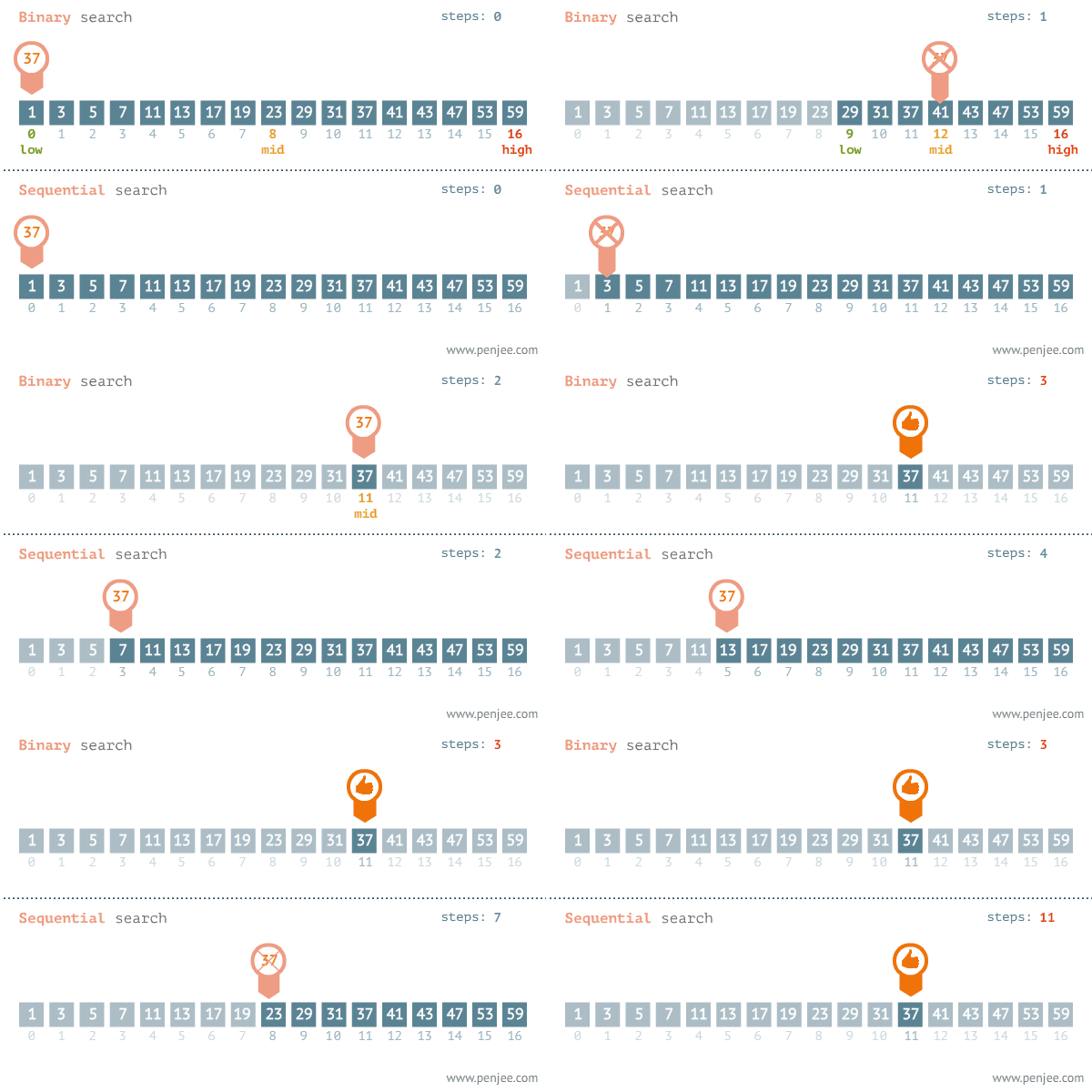
Figure: Binary Search

#include <stdio.h>
int binarySearch(int [], int, int, int);

int main()
{
    //!showArray(array)
  int array[10], c, first, last, n, search,  index;

  printf("Enter number of elements\n");
  scanf("%d", &n);

  printf("Enter %d integers\n", n);

  for (c = 0; c < n; c++)
    scanf("%d", &array[c]);

  printf("Enter value to find\n");
  scanf("%d", &search);

  first = 0;
  last = n - 1;

  index = binarySearch(array, first, last, search);
 
  if (index == -1)
    printf("Not found! %d isn't present in the list.\n", search);
  else
    printf("%d is present at location %d.\n", search, index + 1);
 
  return 0;
} 

int binarySearch(int a[], int s, int e, int f) {
  int m;
 
  if (s > e) // Not found
     return -1;

  m = (s + e)/2;

  if (a[m] == f)  // element found
    return m;
  else if (f > a[m])  
    return binarySearch(a, m+1, e, f);
  else
    return binarySearch(a, s, m-1, f);
}

Enter number of elements
5
Enter 5 integers
1
2
3
4
5
Enter value to find
5
5 is present at location 5. 

C Programming Lab Manual – 55

Write a C program for Linear Search.

procedure linear_search (list, value)

   for each item in the list
      if match item == value
         return the item's location
      end if
   end for

end procedure
Figure: Linear Search

#include <stdio.h>
 
int linear_search(int [], int, int);
 
int main()
{
    //!showArray(array)
int array[10], search, c, n, position;
 
   printf("Input number of elements in array\n");
   scanf("%d", &n);
 
   printf("Input %d numbers\n", n);
 
   for (c = 0; c < n; c++)
      scanf("%d", &array[c]);
 
   printf("Input a number to search\n");
   scanf("%d", &search);
 
   position = linear_search(array, n, search);
 
   if (position == -1)
      printf("%d isn't present in the array.\n", search);
   else
      printf("%d is present at location %d.\n", search, position+1);
 
   return 0;
}
 
int linear_search(int a[], int n, int find) {
int c;
 
   for (c = 0 ;c < n ; c++ ) {
      if (a[c] == find)
         return c;
   }
 
   return -1;
} 

Input number of elements in array
5
Input 5 numbers
5
4
3
2
1
Input a number to search
1
1 is present at location 5.

C Programming Lab Manual – 54

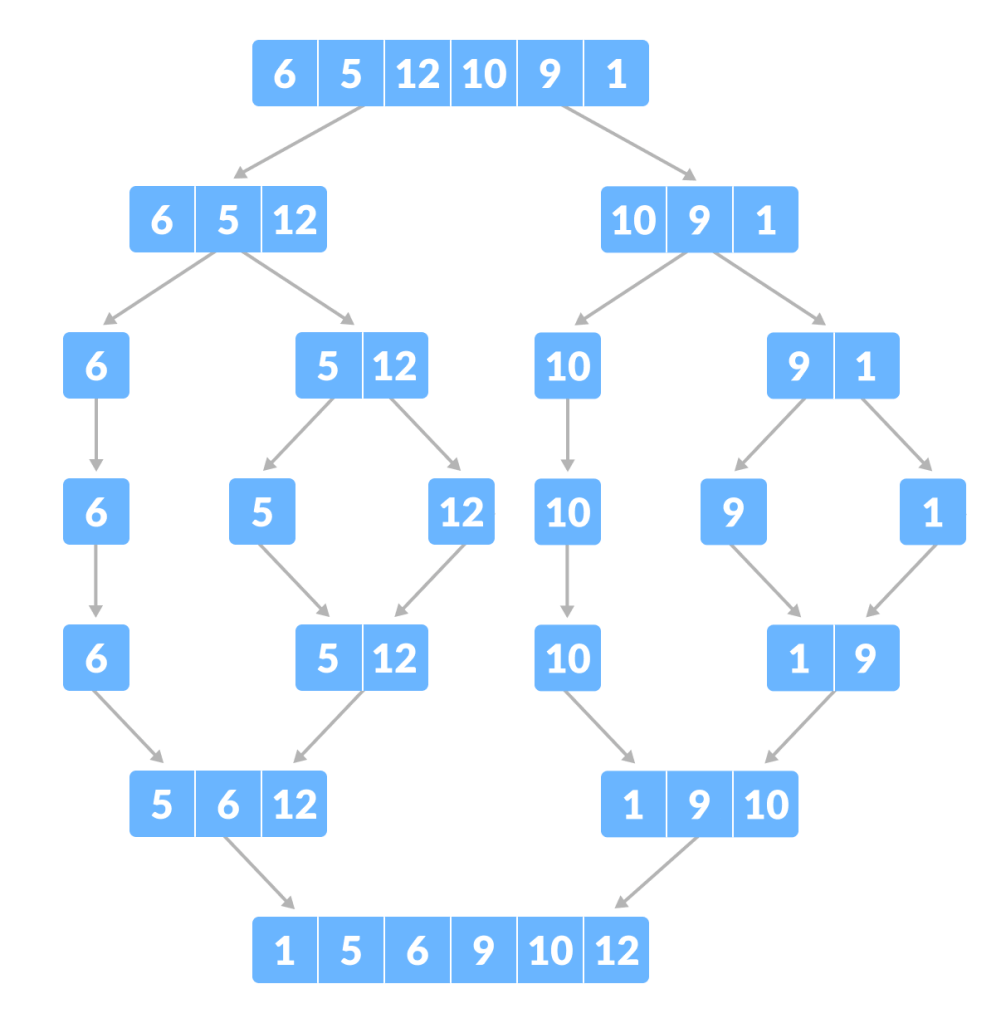
Write a C program for Marge Sort.

MergeSort(A,p,r):

	if p < r
  q = ⌊ (p+r)/2 ⌋
	 MergeSort(A,p,q)
	 MergeSort(A,q+1,r)
	 Merge(A,p,q,r)

Merge(A,p,q,r):

	n1 = q - p + 1
	n2 = r - q
	let L, R be new arrays
	for i = 1 to n1
	 L[i] = A[p+i-1]
	for j = 1 to n2
	 R[j] = A[q+j]
	L[n1+1] = ∞
	R[n2+1] = ∞
	i = 1
	j = 1
	for k = p to r
	 if L[i] ≤ R[j]
	 A[k] = L[i]
	 i = i + 1
	 else
	 A[k] = R[j]
	 j = j + 1

Figure: Marge Sort

#include <stdio.h>

void merge_sort(int i, int j, int a[], int aux[]) {
    if (j <= i) {
        return;
    }
    int mid = (i + j) / 2;

    merge_sort(i, mid, a, aux);
    merge_sort(mid + 1, j, a, aux);
    int pointer_left = i;
    int pointer_right = mid + 1;
    int k;

    for (k = i; k <= j; k++) {
        if (pointer_left == mid + 1) {
            aux[k] = a[pointer_right];
            pointer_right++;
        } else if (pointer_right == j + 1) {
            aux[k] = a[pointer_left];
            pointer_left++;
        } else if (a[pointer_left] < a[pointer_right]) {
            aux[k] = a[pointer_left];
            pointer_left++;
        } else {
            aux[k] = a[pointer_right];
            pointer_right++;
        }
    }

    for (k = i; k <= j; k++) {
        a[k] = aux[k];
    }
}

int main() {
    //!showSort(a)
    int a[5], aux[5], n, i;
    printf("Enter number of elements in the array:\n");
    scanf("%d", &n);
    printf("Enter %d integers\n", n);
    for (i = 0; i < n; i++)
        scanf("%d", &a[i]);

    merge_sort(0, n - 1, a, aux);

    printf("Printing the sorted array:\n");
    for (i = 0; i < n; i++)
        printf("\t%d", a[i]);

    return 0;
}

Enter number of elements in the array:
5
Enter 5 integers
5
4
3
2
1
Printing the sorted array:
	1	2	3	4	5

C Programming Lab Manual – 53

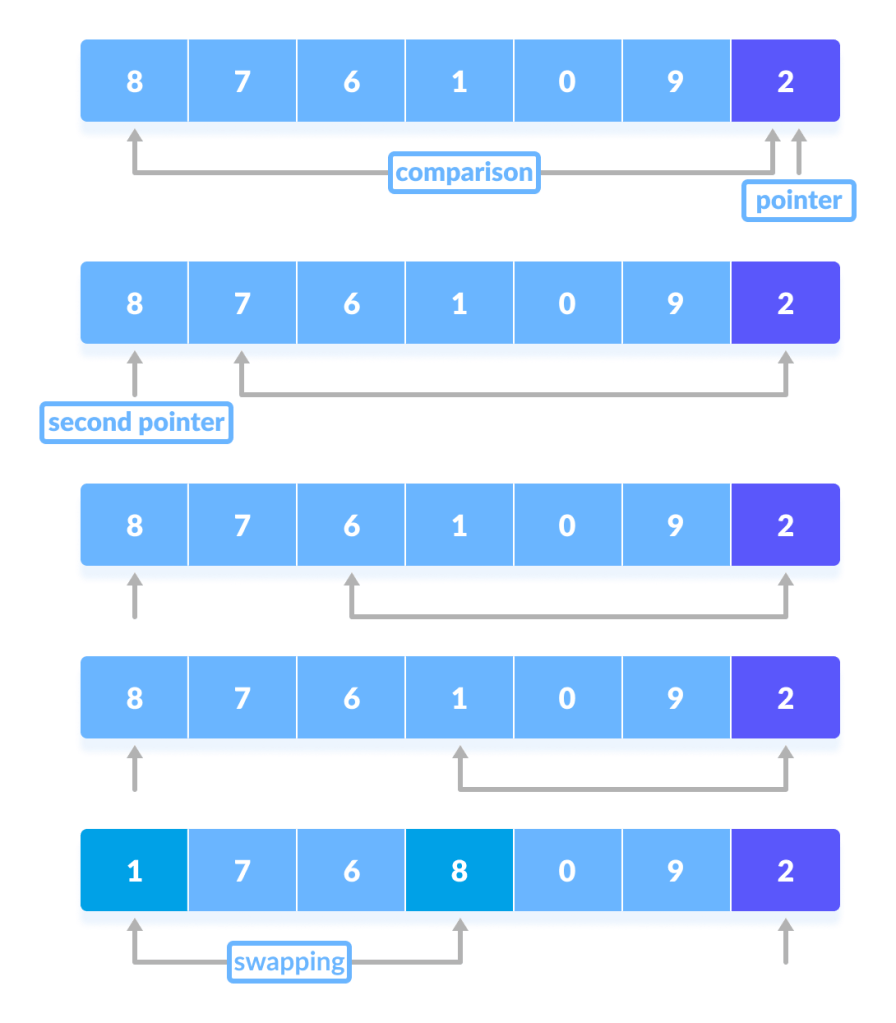
Write a C program for Quick Sort.

Quicksort(A,p,r):

	if p < r
	 q = Partition(A,p,r)
	 Quicksort(A,p,q - 1)
	 Quicksort(A,q + 1,r)

Partition(A,p,r):
	i = p-1
	for j = p to r-1
	 if A[j] ≤ A[r]
	 i = i + 1

	 exchange A[i] with A[j]
	exchange A[i+1] with A[r]
	return i+1

Figure: Quick Sort

#include <stdio.h>
 
void print_array(int size, int array[]) {
    for (int pos = 0; pos < size; pos += 1) {
        printf("%d%s", array[pos], pos + 1 == size ? "" : " ");
    }
    printf("\n");
}
 
void quick_sort (int size, int array[], int left, int right) {
    //! quicksort = showSort(array, cursors=[left, right, i, j], dim=size, thresholds=[pivot])
    if (right <= left)
        return;
    int pivot = array[right];
    int i = left;
    int j = right;
    while (1) {
        while (array[i] < pivot)
            i += 1;
        while (pivot < array[j])
            j -= 1;
        if (i >= j) {
            break;
        }
        int temp = array[i];
        array[i] = array[j];
        array[j] = temp;
        i += 1;
        j -= 1;
    }
    quick_sort(size, array, left, i - 1);
    quick_sort(size, array, i, right);
}
 
int main() {
    //! quicksort = showSort(array, dim=n)
    int array[] = {4, 2, 1, 2, 3, 2, 1, 0, 1};
    int n = sizeof array / sizeof *array;
    quick_sort(n, array, 0, n - 1);
    print_array(n, array);
    return 0;
} 

0 1 1 1 2 2 2 3 4

C Programming Lab Manual – 52

Write a C program for Insertion Sort.

for j = 2 to A.length
	 key = A[j]
	 i = j - 1
	 while i > 0 and A[i] > key
  A[i + 1] = A[i]
	 i = i - 1
	 A[i + 1] = key
Figure: Insertion Sort

#include <stdio.h>

int main()
{
//!showSort(array)
  int n, array[5], c, d, t, flag = 0;

  printf("Enter number of elements\n");
  scanf("%d", &n);

  printf("Enter %d integers\n", n);

  for (c = 0; c < n; c++)
    scanf("%d", &array[c]);

  for (c = 1 ; c <= n - 1; c++) {
    t = array[c];

    for (d = c - 1 ; d >= 0; d--) {
      if (array[d] > t) {
        array[d+1] = array[d];
        flag = 1;
      }
      else
        break;
    }
    if (flag)
      array[d+1] = t;
  }

  printf("Sorted list in ascending order:\n");

  for (c = 0; c <= n - 1; c++) {
    printf("%d\n", array[c]);
  }

  return 0;
}

Enter number of elements
5
Enter 5 integers
5
4
3
2
1
Sorted list in ascending order:
1
2
3
4
5