Function Main
     float var = 23.564327;
    Declaring pointer variables upto level_4
    Initializing pointer variables
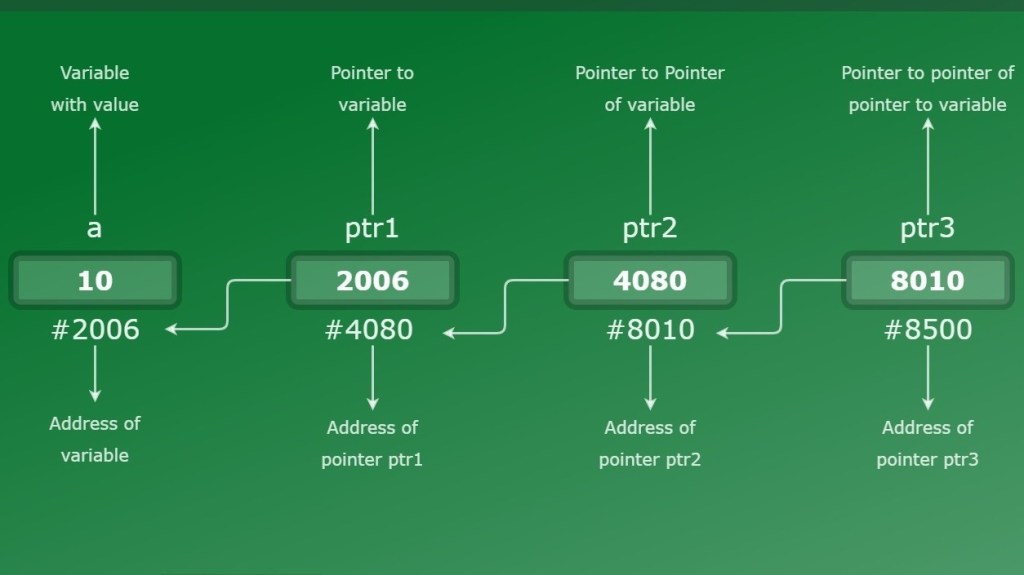
	ptr1 = &var;
	ptr2 = &ptr1;
	ptr3 = &ptr2;
	ptr4 = &ptr3;
Output values
	"Value of var = %f\n", var);
    "Value of var using level-1"
		" pointer = %f\n",
		*ptr1);
	"Value of var using level-2"
		" pointer = %f\n",
		**ptr2);
	"Value of var using level-3"
		" pointer = %f\n",
		***ptr3);
	"Value of var using level-4"
		" pointer = %f\n",
		****ptr4);
End
Value of var = 23.564327
Value of var using level-1 pointer = 23.564327
Value of var using level-2 pointer = 23.564327
Value of var using level-3 pointer = 23.564327
Value of var using level-4 pointer = 23.564327
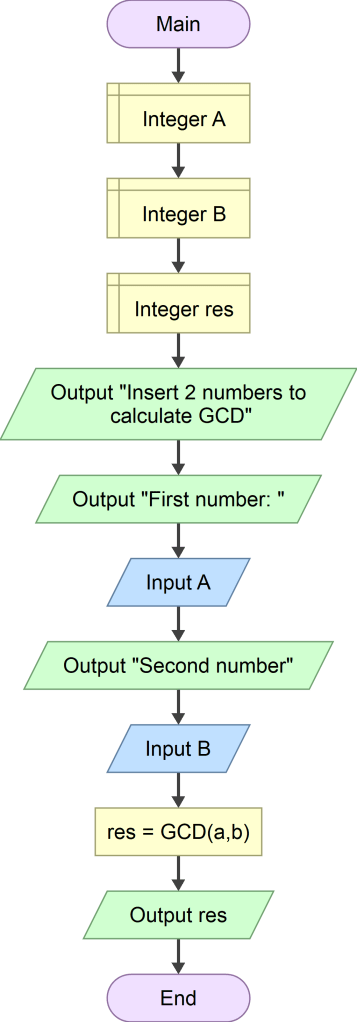
Function Main
    Declare Integer A
    Declare Integer B
    Declare Integer res

    Output "Insert 2 numbers to calculate GCD"
    Output "First number: "
    Input A
    Output "Second number"
    Input B
    Assign res = GCD(a,b)
    Output res
End

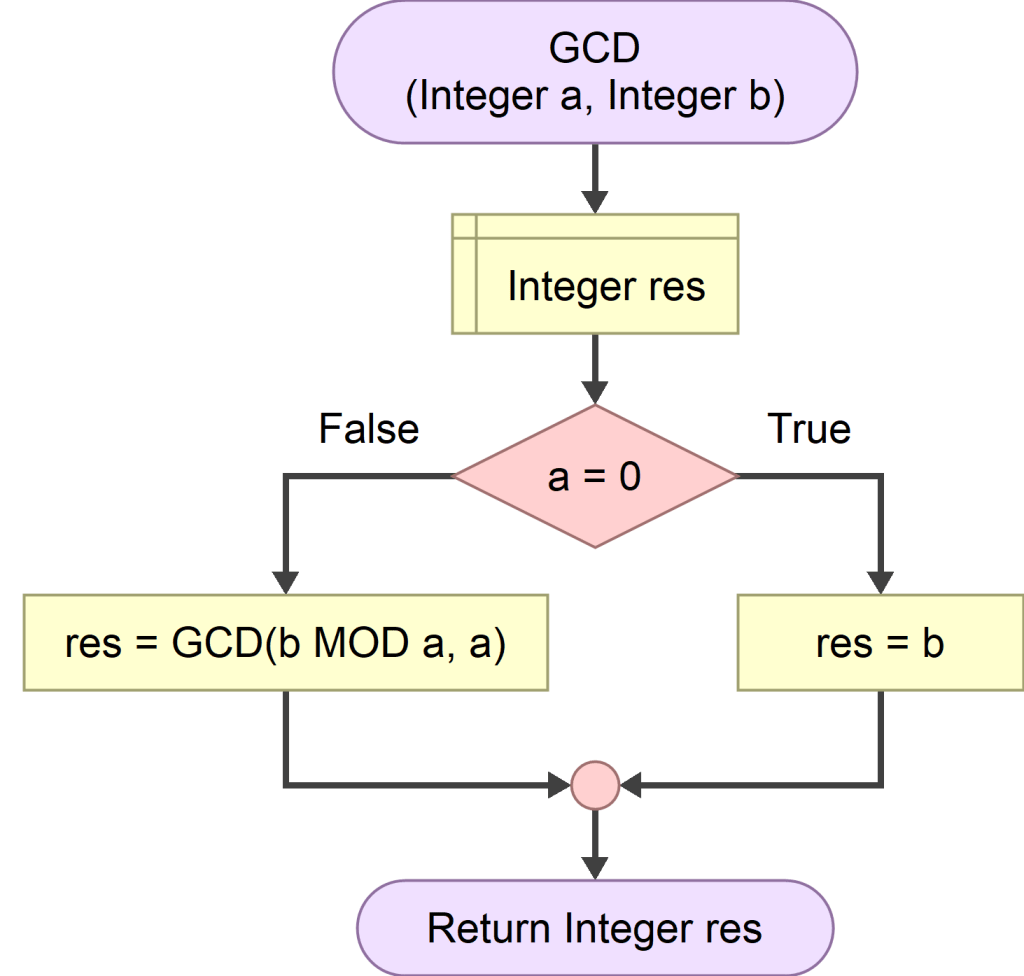
Function GCD (Integer a, Integer b)
    Declare Integer res

    If a = 0
        Assign res = b
    Else
        Assign res = GCD(b MOD a, a)
    End
Return Integer res
#include <stdio.h>

int GCD(int a, int b);

int main() {
    int a;
    int b;
    int res;

    printf("Insert 2 numbers to calculate GCD:\n");
    printf("First number: \n");
    scanf("%d", &a);
    printf("Second number:\n");
    scanf("%d", &b);
    res = GCD(a, b);
    printf("%d\n", res);
    return 0;
}

int GCD(int a, int b) {
    int res;

    if (a == 0) {
        res = b;
    } else {
        res = GCD(b % a, a);
    }

    return res;
}
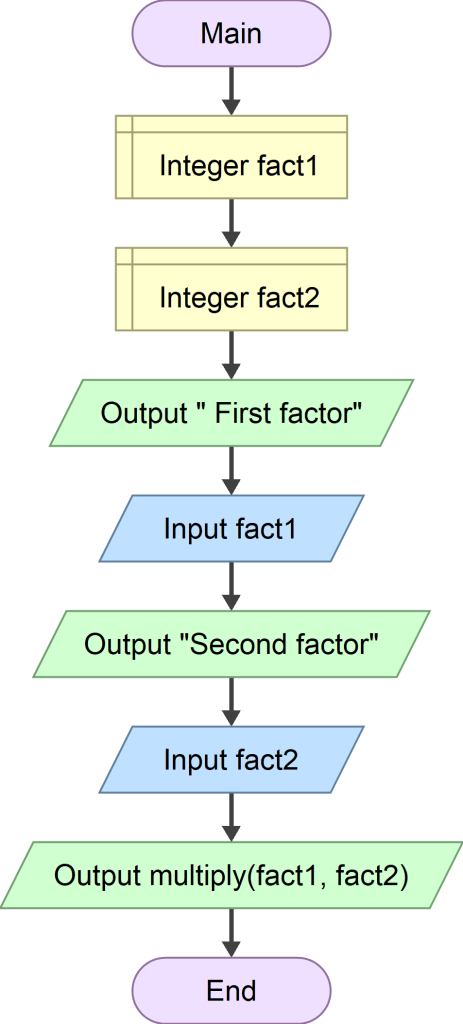
Function Main
    Declare Integer fact1
    Declare Integer fact2
    Output " First factor"
    Input fact1
    Output "Second factor"
    Input fact2
    Output multiply(fact1, fact2)
End

Function multiply (Integer x, Integer y)
    Declare Integer result
    If y = 0
        Assign result = 0
    End
    If y > 0
        Assign result = x + multiply(x, y-1)
    End
    If y < 0
        Assign result = -multiply(x, -y)
    End
Return Integer result
#include <stdio.h>

int multiply(int x, int y);

int main() {
    int fact1;
    int fact2;

    printf("First factor:\n");
    scanf("%d", &fact1);
    printf("Second factor:\n");
    scanf("%d", &fact2);
    printf("%d\n", multiply(fact1, fact2));

    return 0;
}

int multiply(int x, int y) {
    int result;

    if (y == 0) {
        result = 0;
    }
    if (y > 0) {
        result = x + multiply(x, y - 1);
    }
    if (y < 0) {
        result = (int) (-multiply(x, (int) (-y)));
    }

    return result;
}




 Programming24 School